One trail, one theme, zero small talk. Guided reflection at four kilometres per hour — a walk-and-think format that turns a ridgeline into a thinking room and strangers into thinking partners.
REQUEST A SPOT ↗

We take founders, leaders and unconventional thinkers off the grid and onto the trail — swapping meeting rooms for mountains, and baseline thinking for the ideas you only find beyond the tree line.
LOG 01 THE BELIEF
Boardrooms have ceilings. Ideas don’t. Trailblazers Collective creates an empowering space in the wild, where aspiring leaders grow, connect — and think dangerously well. Reconnecting with nature taps a near-magical sense of inspiration and creativity, the kind no whiteboard has ever produced. So we walk. We climb. We ask better questions at altitude. This is not team building. This is base camp for whatever you are building next.

Inspiration beyond the baseline.
LOG 02 THE PROGRAM
One trail, one theme, zero small talk. Guided reflection at four kilometres per hour — a walk-and-think format that turns a ridgeline into a thinking room and strangers into thinking partners.
REQUEST A SPOT ↗Strategy, vision and problem-solving sessions held where thinking has room to move. Structured, facilitated, and gloriously offline. Flip charts optional — weather guaranteed.
PLAN A SESSION ↗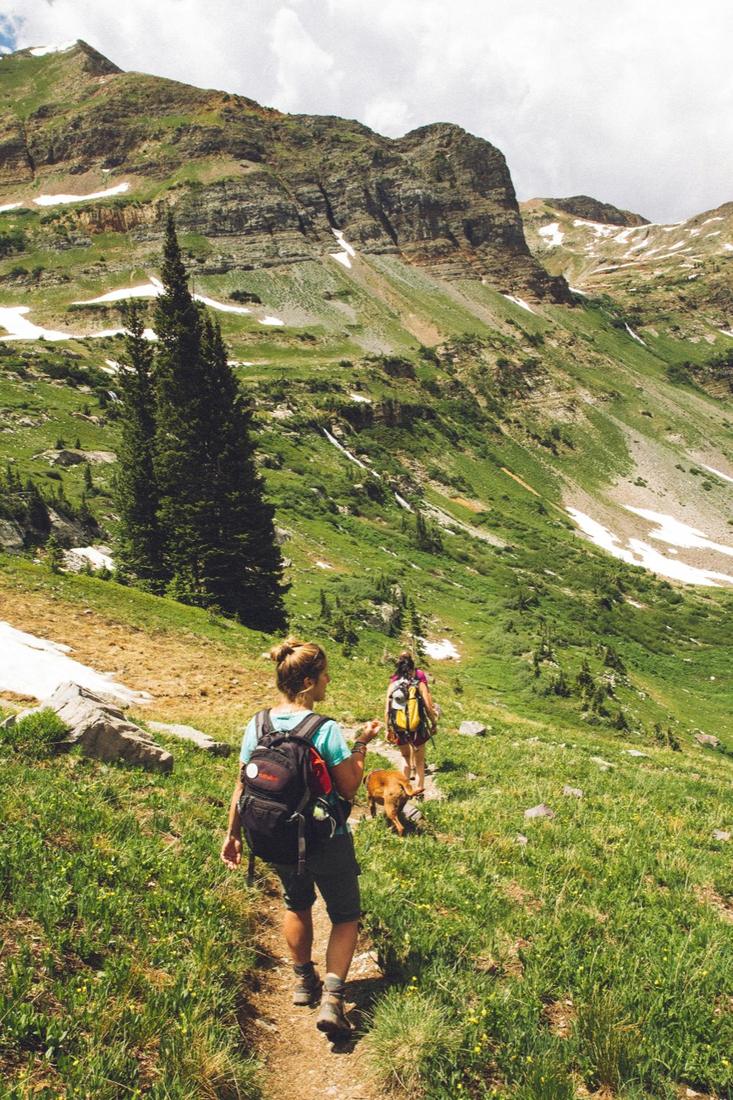
A trail, a question and an honest hour. Personal leadership coaching in motion — because breakthroughs rarely happen sitting down, and never in a calendar slot labelled “catch-up”.
START THE CONVERSATION ↗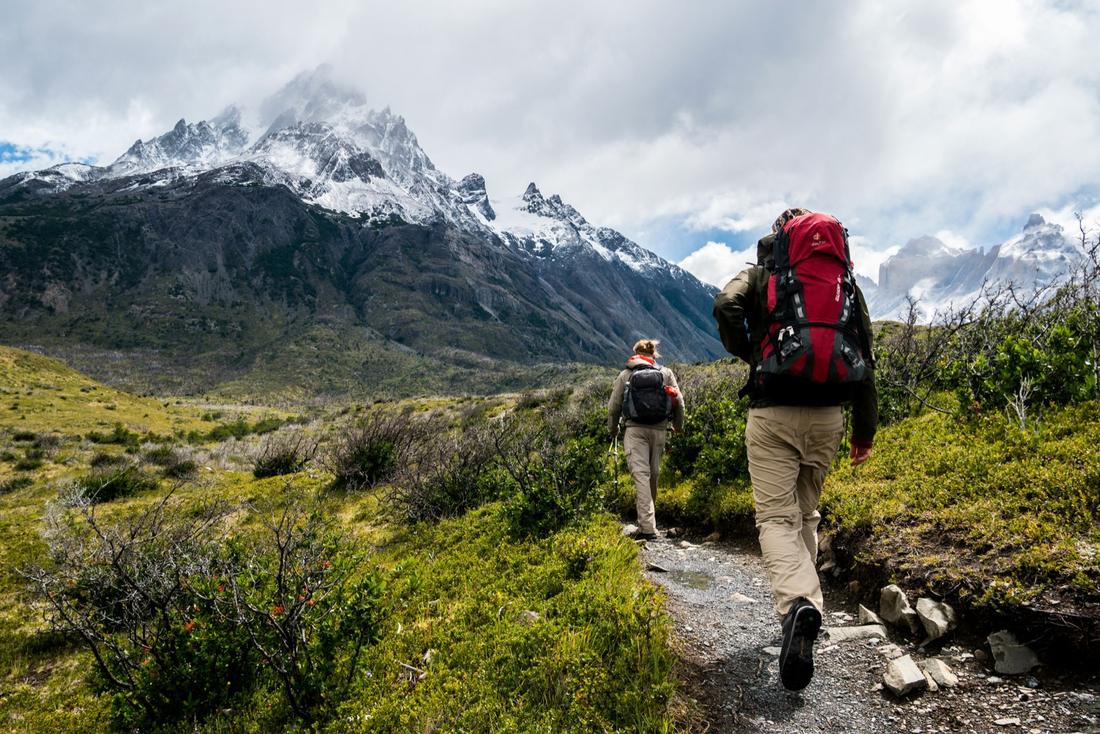
Team development with actual terrain. Shared effort, shared summit, shared story — the kind your team retells for years, long after the off-site hotel is forgotten.
TAKE YOUR TEAM UP ↗

“The summit is the excuse.
The climb is the classroom.”
LOG 03 NEXT EXPEDITION
VISIONARY 000°
“Come with me.”
When change needs a clear direction — and people need to see where it leads.
COACHING 060°
“Try this.”
When someone wants to grow, and you play the long game with them.
AFFILIATIVE 120°
“People come first.”
When trust is broken, or a team is worn out under pressure.
DEMOCRATIC 180°
“What do you think?”
When you need real buy-in — or honestly don’t know the answer yourself.
PACESETTING 240° · SPARINGLY
“Do as I do, now.”
For fast results from a skilled, motivated team. Overused, it burns people out.
COMMANDING 300° · SPARINGLY
“Do what I tell you.”
In a real crisis, for a short time. Overused, people stop thinking for themselves.
RUINOUS EMPATHY
“It’s fine, really.”
Kind in the moment, useless after it. The problem stays — and so does the person who has it.
RADICAL CANDOR · THE SUMMIT
“You cut Sam off twice today, and he went quiet. I need everyone heard — let him finish next time.”
You care about the person and you tell them the truth. Both at once.
MANIPULATIVE INSINCERITY
“Love it!” — then complaining about it later.
Neither honest nor kind. The lowest ground on the map.
OBNOXIOUS AGGRESSION
“That was sloppy.”
Honest, but it lands as an attack — so nobody hears the honest part.
Feedback usually fails in one of two directions. We are so careful not to hurt that we say nothing useful — or so direct that the other person only hears an attack. Good feedback needs both at the same time: you care about the person, and you are willing to tell them the truth. It is a skill, not a personality trait, and it can be practised — giving it as well as receiving it without defending, explaining or collapsing.
One simple formula makes it practical: FEED. Start with the facts — one concrete moment, not “you always”. Name the effect it had. Say what you expect instead. And agree on the development: the next step, and when you check in. How much of it you spell out depends on the person — the same skill as picking a style.
F·E·E·D A SIMPLE WAY TO SAY IT
LOG 04 LAST EXPEDITION
Our second coaching hike, built around one craft: what coaching is, how a session is structured — and hours of practising it on each other. The real coaching sessions fell on the steepest stretch of the climb and carried us all the way to the summit, with the Tegernsee below.
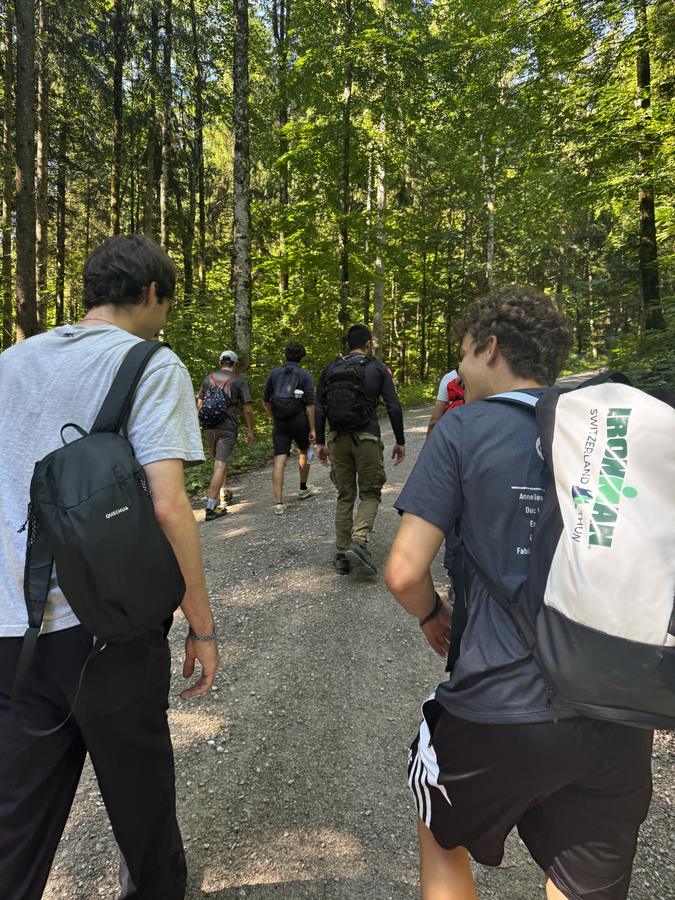
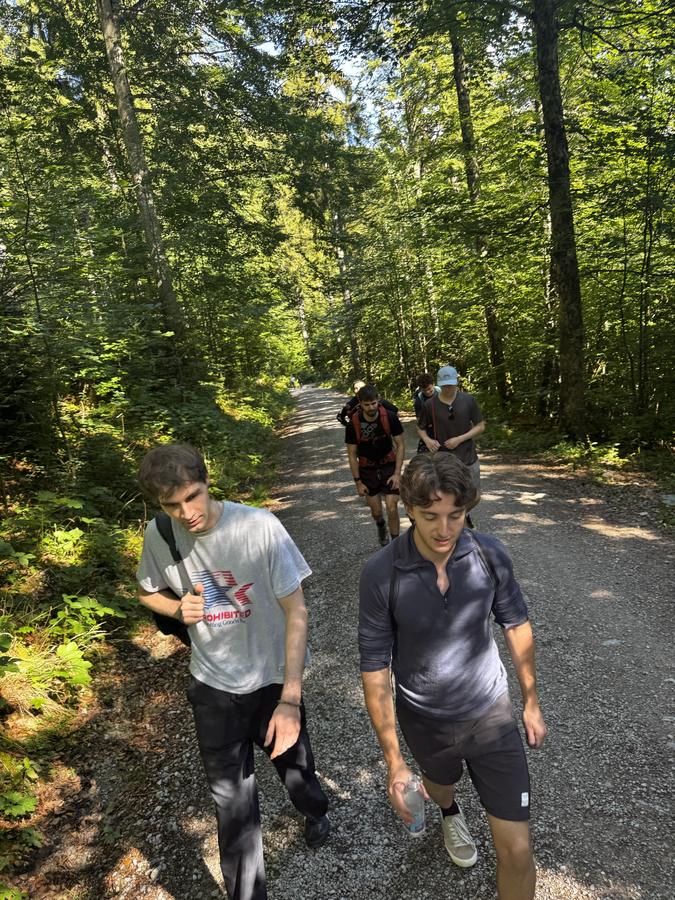
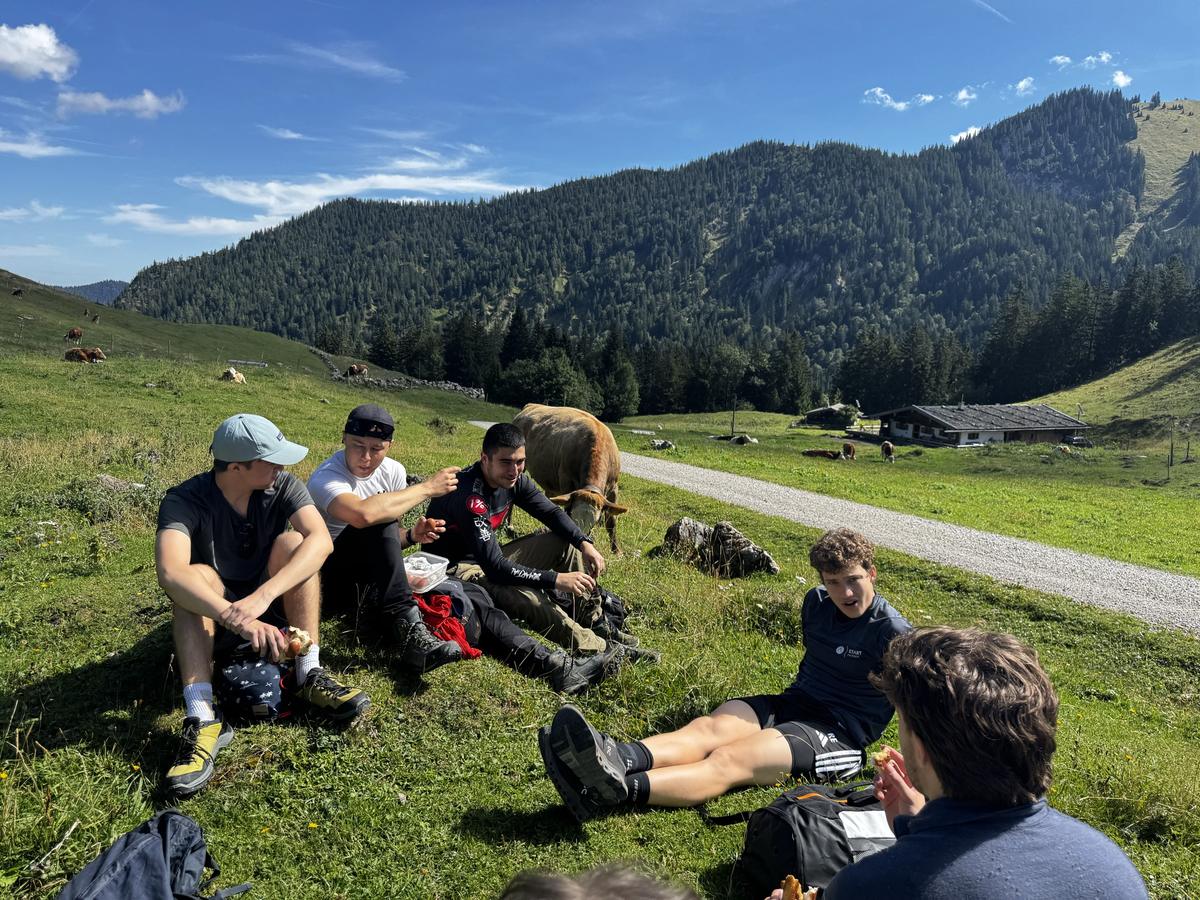
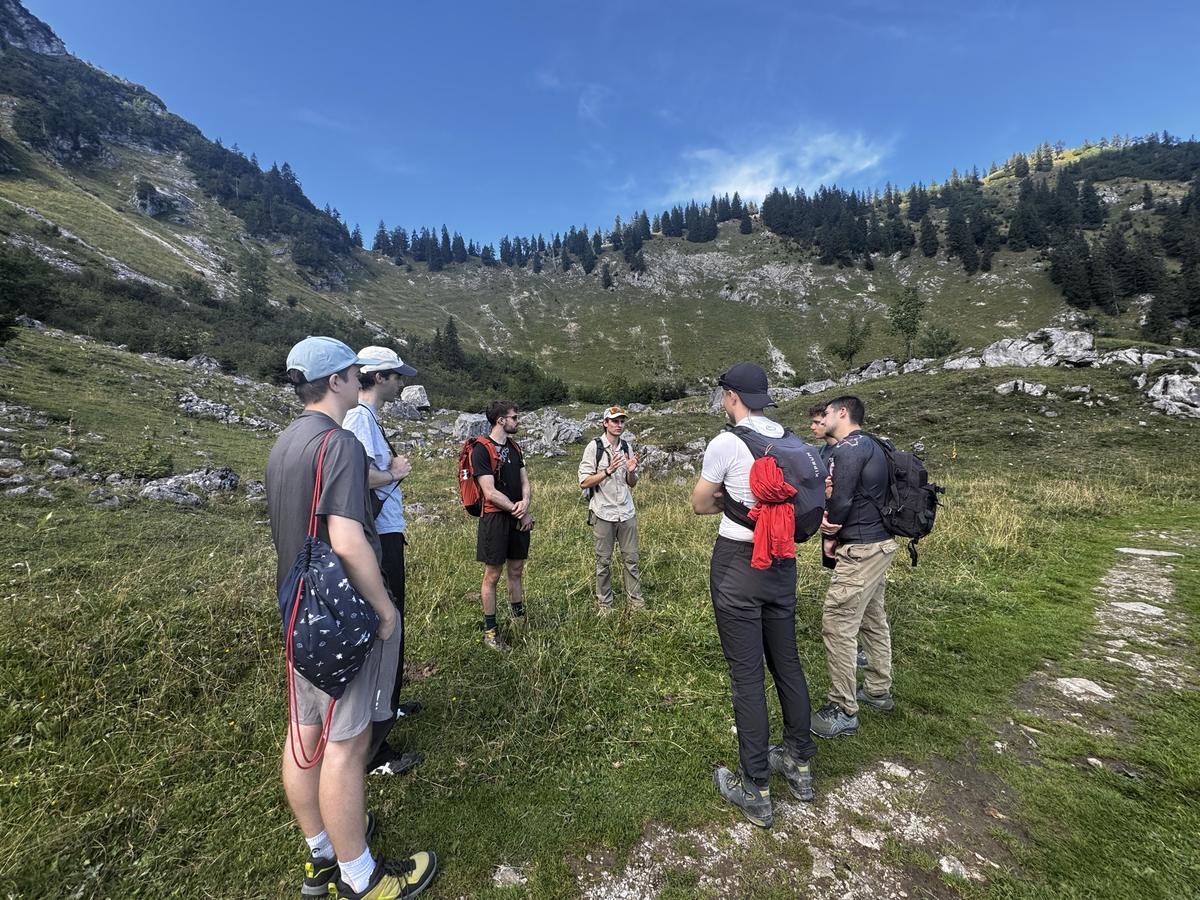

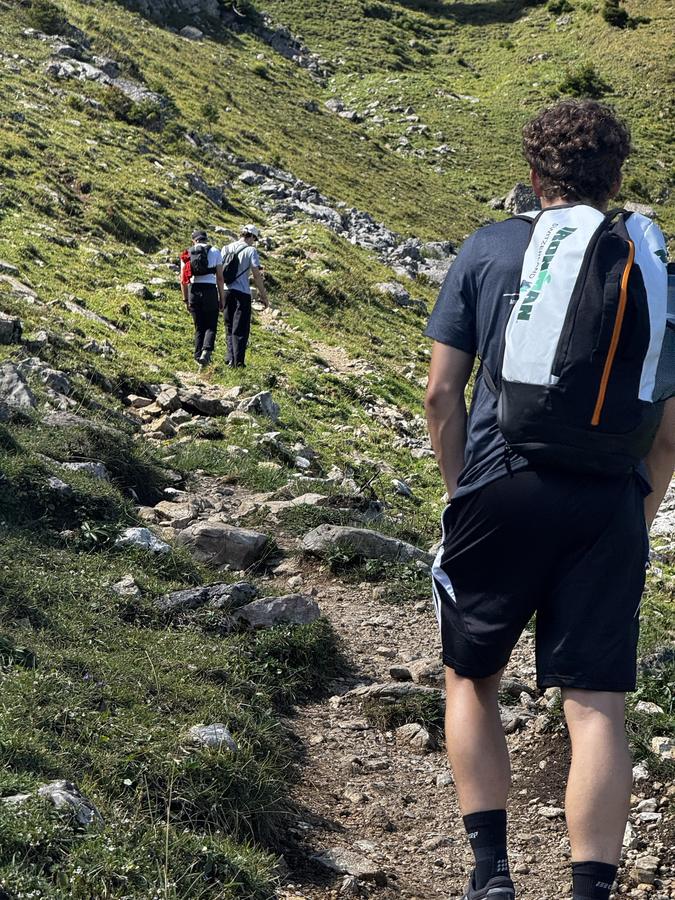


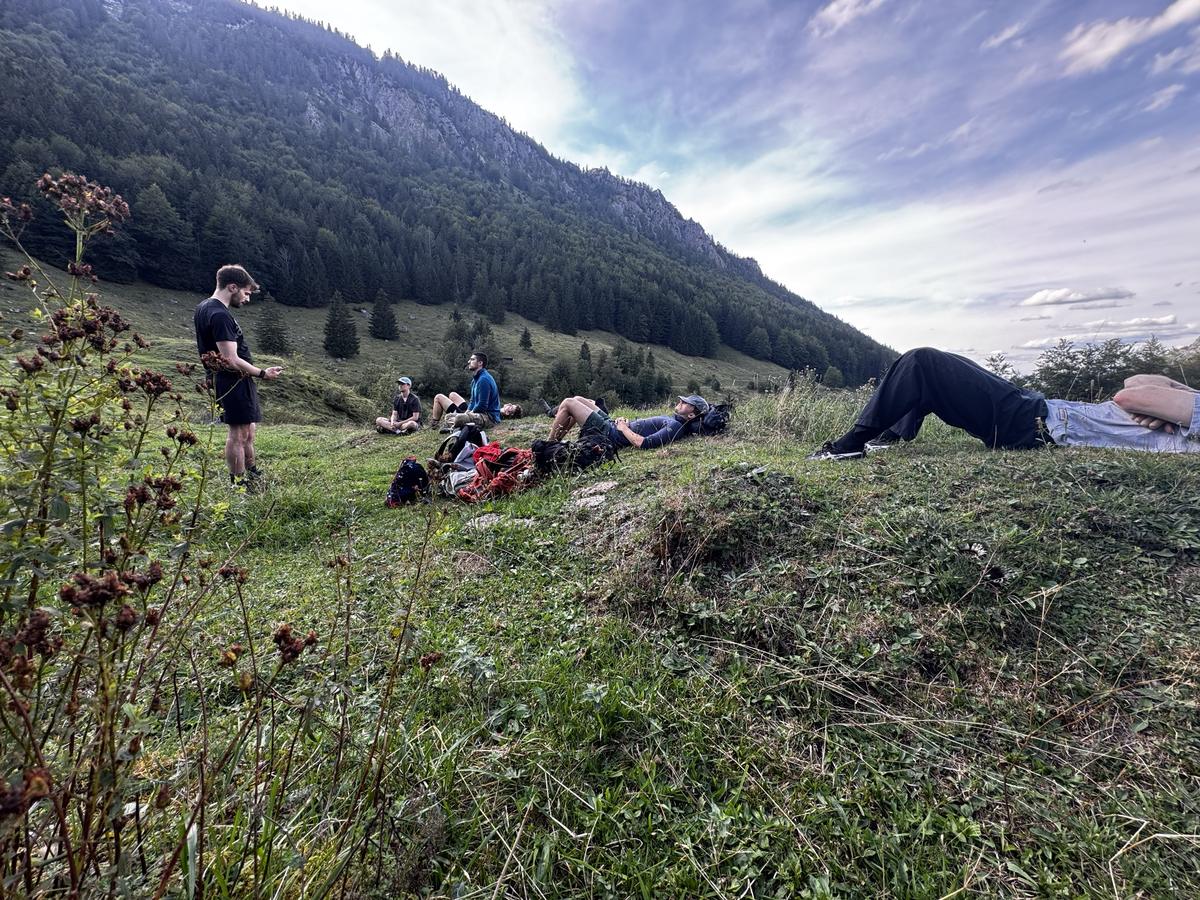
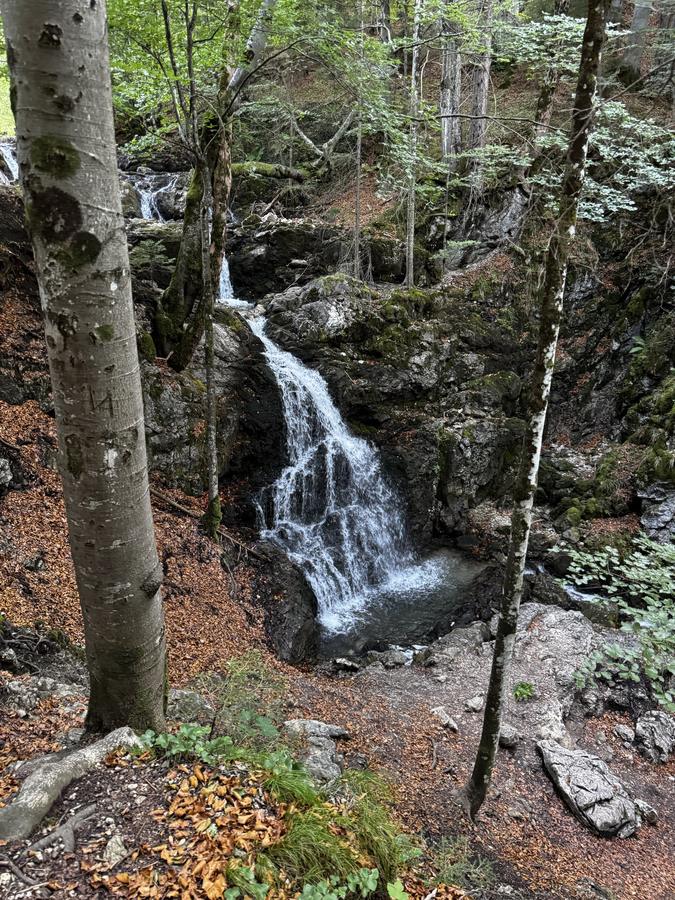
The topic was coaching, and the plan was simple: explain what coaching is, then practise it straight away — theory and practice on the same day, on the same trail. We started the way every good hike starts: walking, getting to know each other, and just talking.
The first input was a short one on what coaching actually is — and where it stops. We drew the lines to consulting, training, therapy and mentoring, then talked about the attitude it takes: holding a safe space, staying process-oriented, being a partner rather than an expert, and remembering that the person being coached is the expert on their own life. A few words on ethics, too.
Then the first exercise, in pairs. One person talks about a topic for about ten minutes; the other only listens — no replies, no comments — and then plays back everything they heard. Then the roles swap. We did it because listening is the foundation of coaching, and we closed it with a short reflection on what it felt like on both sides.
A break, something to eat, some time to relax, and a stretch of simply hiking. Then the second input: the structure of a coaching session. We used the I-GROW model — intention, goal, reality, options, way forward — as a line to follow, so the practice that came next had something to hold on to.
The practice was a real coaching session. In pairs again, one person brought a genuine challenge from their own life, and the other coached them through it, putting the theory to work. It was the most demanding part of the day, and not only mentally: it fell on the steepest stretch of the climb, and it carried us all the way to the top.
On the summit we reflected — what was new, what worked, what did not. Then we swapped roles and went again. It took time, and it was worth it: this was the heart of the day, the point where coaching stopped being a concept and became something everyone had done.
The way down was just hiking. We jumped into a lake and swam, and David led a meditation on presence — being in the moment, not judging, not reacting — which turns out to be as much a coaching skill as any question.
We closed back at the car park with a final reflection on why coaching matters for leadership: it empowers people to find their own solutions instead of asking for answers and to become self-reliant, it supports development and growth, and it lifts engagement and motivation.
LOG 05 FIRST EXPEDITION
The debut coaching-hike workshop. Six of us set off for the Brauneck summit and the mountains around Lenggries — fifteen kilometres of climbing and coached conversation, a hut lunch at Stie-Alm, one summit view, and one very cold Isar river.
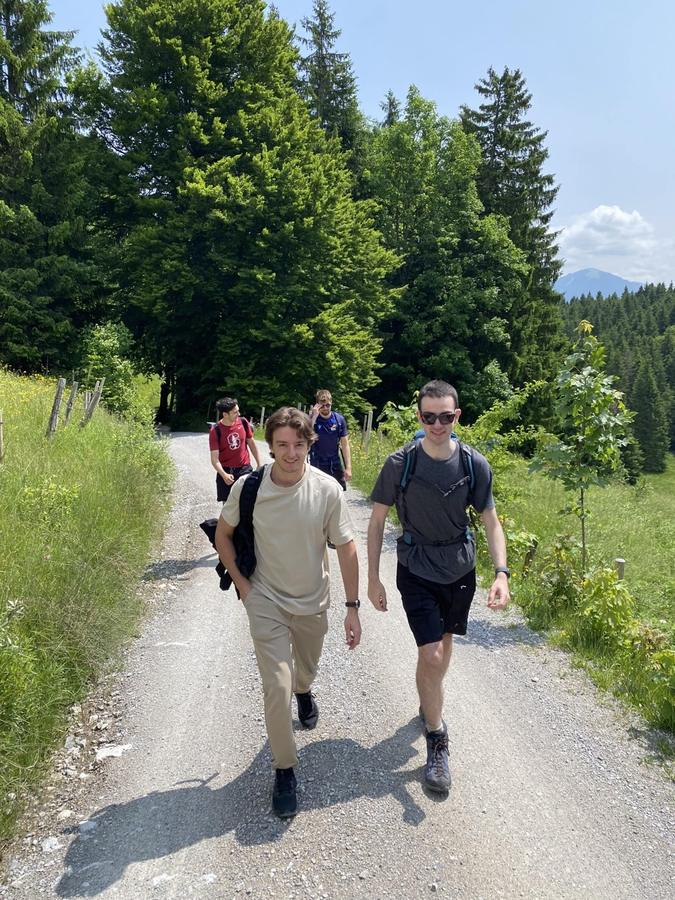
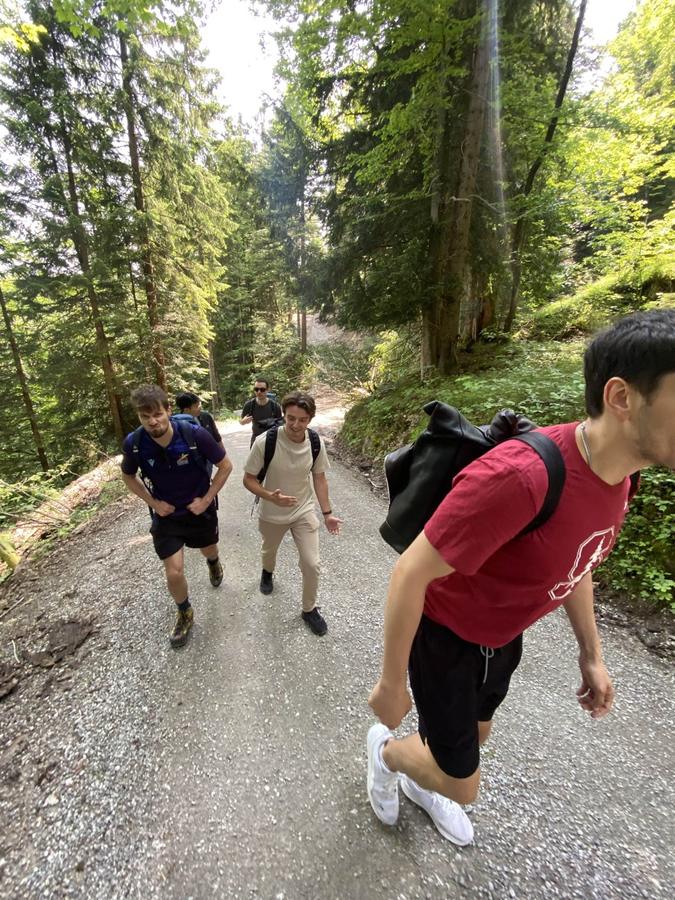
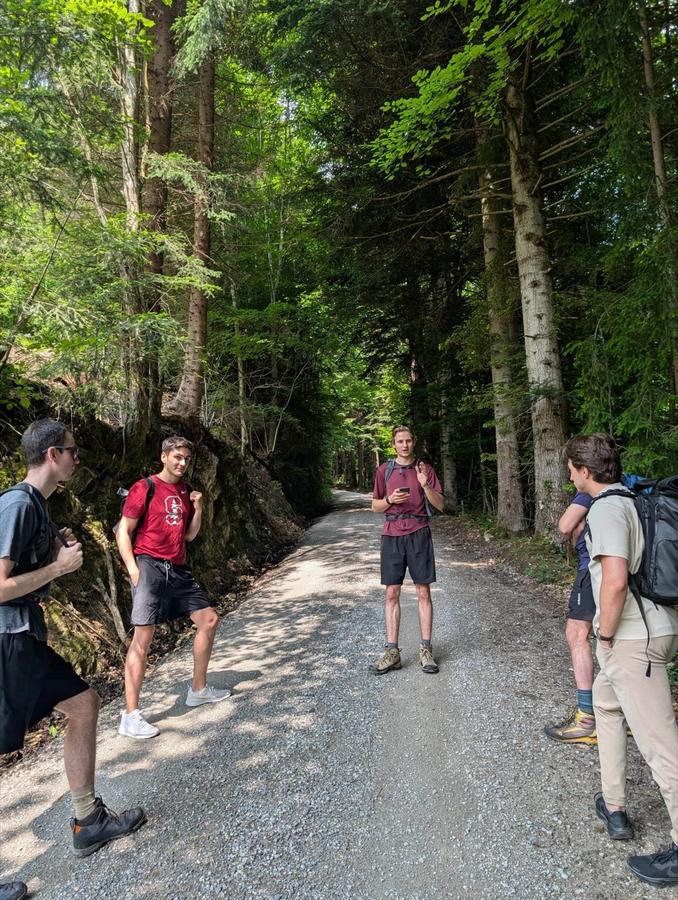
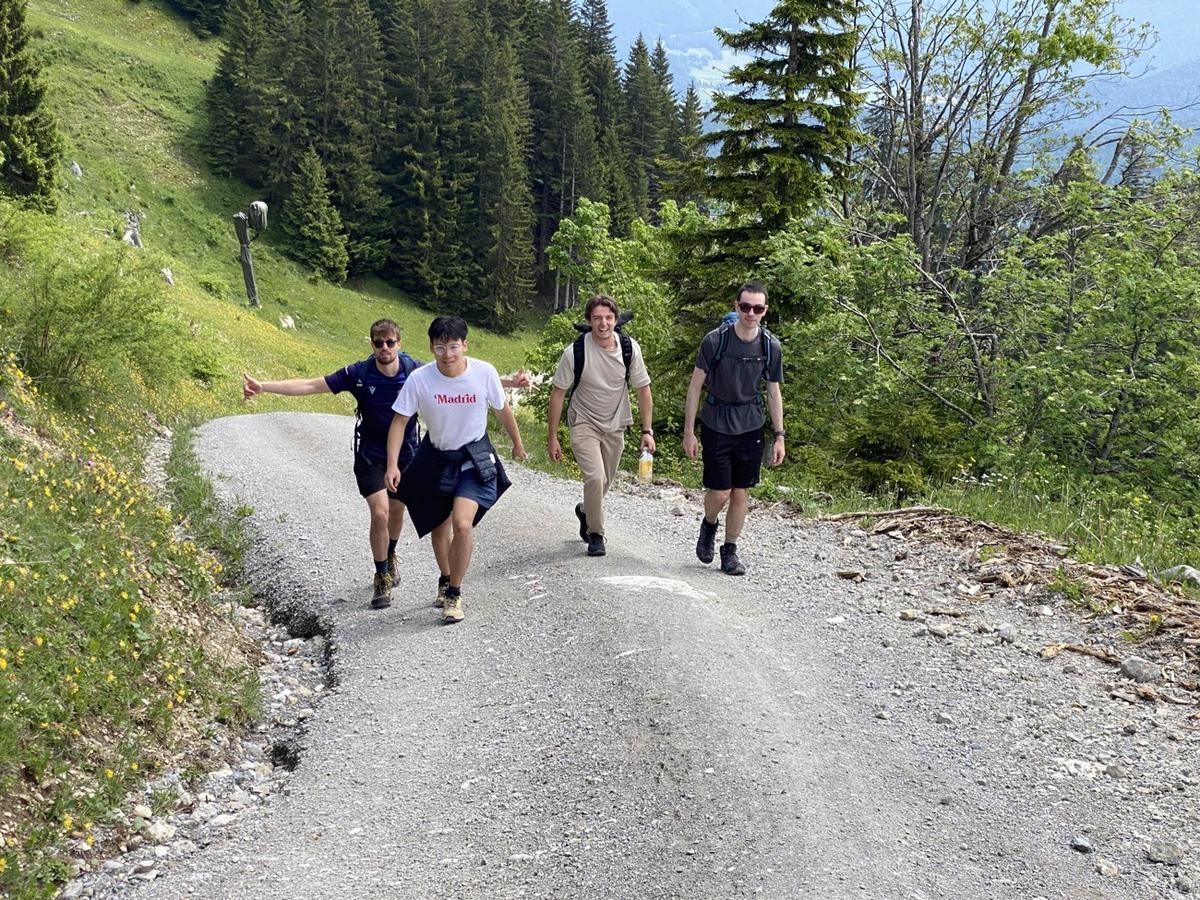


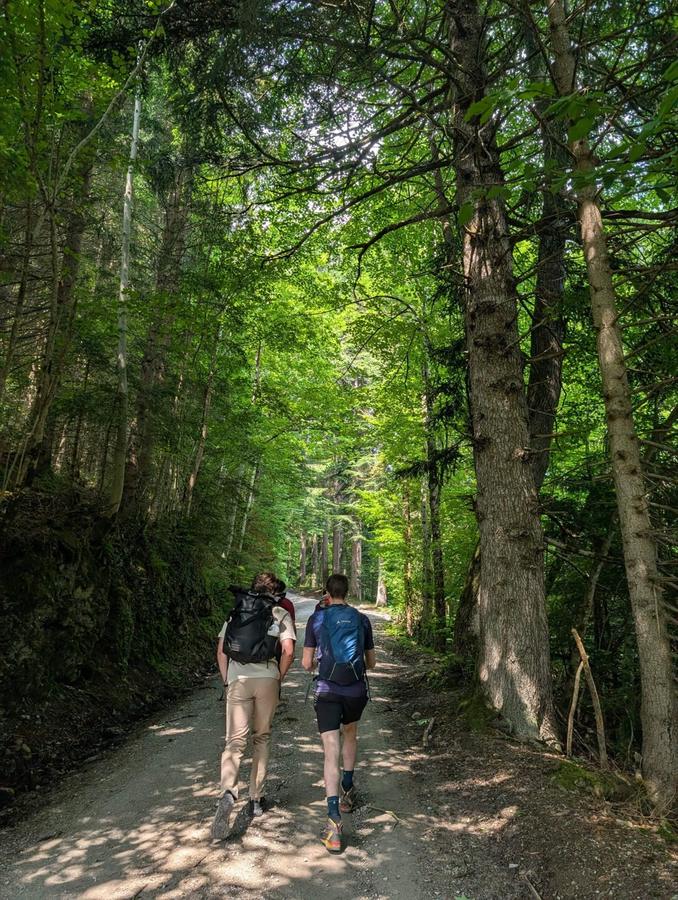
Whit Monday marked the debut of my first-ever coaching hike workshop – and overall, it was a great success. Six participants, including myself, set off for the Brauneck-Summit and the Mountains around Lenggries to experience a day where coaching met nature, movement, and meaningful group connection. The group size turned out to be perfect: small enough for depth and intimacy, yet large enough for dynamic exchange. Working in pairs allowed for focused dialogue, and a warm, open atmosphere emerged naturally.
The hiking route covered about 15 kilometers and was physically quite demanding – especially the steep ascent on a plain gravel path. While that particular section wasn’t the most scenic, the vibrant greenery, fresh air, and positive group energy more than made up for it – also the broad road made it possible to change conversation partners flexibly and made it easy to walk side by side. We paused at a mountain hut for lunch and eventually even reached the summit to enjoy the view. To round off the day, some of us jumped into the Isar river – the perfect refreshing end to a fulfilling experience. After that, in order to fetch the train in time, we had a spontaneous run in our hiking gear to the train station – as a team and with the time pressure it felt a little bit like a military drill and marked a cool way to lift the collective spirit and end the day on a high note.
The day was split into two main parts. In the morning, I gave a short introduction to coaching fundamentals – including how it differs from consulting and mentoring. I presented coaching as a solution-oriented thinking process where the coach acts as a thinking partner, primarily through questions. This was followed by our first practical exercise: active listening. One person shared a story while the other simply listened – no feedback, no comments – and then repeated what they had heard as accurately as possible. This simple yet powerful exercise led to immediate insights about how rarely we truly listen, what nuances we can sense this way – and how healing it can be to just be heard.
In the afternoon, we explored powerful questioning techniques and a systems thinking approach. The group then practiced real coaching conversations, using personal topics and working in pairs. What stood out to me was how open and brave everyone was in sharing their stories – and how attentively and empathetically they coached each other. There was nothing forced or artificial about it – genuine depth and connection emerged. Also bearing in mind that this was the first time coaching for most of them, they were brilliant – and already new perspectives where explored and innovative solutions for problems have been found.
It was an intense day – physically, mentally, and emotionally. I realized how demanding it is to lead a workshop while holding space for the group, managing time and logistics, guiding exercises, and also participating in them. Especially during the hike, I often had to make spontaneous decisions: Are people still in their coaching sessions? Can we continue walking? Where is the group right now? At times I found myself walking back and forth, calling people or signaling with a whistle – I hadn’t quite anticipated how much coordination would be required on the move.
Content-wise, I learned that less is more. I had initially prepared additional material on topics like leadership and coaching in business settings – but it became clear that alternating between short theory inputs and hands-on practice was the right choice. That was also reflected in the feedback I received. The exercises took center stage, and the group reflections afterward were often the most impactful moments.
I’m genuinely proud of how well the format worked – and of how deeply the participants engaged with coaching as a topic. Coaching plays such a key role in leadership and personal growth, and I’m seriously considering making it an even stronger focus of future sessions. It’s a space where I feel confident, experienced, and able to provide real value.
This first edition was an intense and inspiring starting point. I’m taking a lot of learnings with me – on a content, facilitation, and organizational level – and I’m already looking forward to developing the format further. This won’t be the last one – and I’m excited for what’s to come.
LOG 06 THE CREW

FOUNDER · COACH & FACILITATOR
Founder of Trailblazers Collective and the voice behind the field reports — designs and leads the formats: coaching fundamentals, active listening, powerful questions, systems thinking. Core conviction: a coach is a thinking partner, not an answer machine.
WALK WITH JAN-NICLAS ↗
COACH & FACILITATOR
Coach and facilitator — co-leading the Trailblazers hikes and workshop formats on the trail.
WALK WITH DAVID ↗LOG 07 THE COLLECTIVE

LOG 08 YOUR MOVE
TAKES YOU TO OUR WHATSAPP GROUP — NEXT DATES, PACKING LISTS, ZERO SPAM.